Boost Surge X Official Website › Blog › Saw Palmetto, Nettle And Your PSA Test
Saw Palmetto, Nettle And Your PSA Test
- Saw palmetto and nettle both act, in theory, on the enzyme that prescription prostate drugs block.
- Those prescription drugs are known to roughly halve a PSA reading, which can mask a problem.
- The evidence that saw palmetto does the same at supplement doses is weak: the best trials found no clinical effect at all.
- The Boost Surge X panel carries 20 mg of each, against 320 and 360 mg in the trials.
- The whole precaution: tell the doctor who orders the test what you take. It costs one sentence.
Two of the seven items on the Boost Surge X panel are studied in the prostate rather than in vitality: saw palmetto and nettle. That makes one conversation necessary rather than optional, and it is a conversation most men in the age group buying this product will already be having for other reasons.
This article explains what the concern is, how strong the evidence behind it actually is, and the single sentence that deals with the whole thing. It is not medical advice and it is not a reason to panic. It is a reason to say something out loud at an appointment you were already going to.
Why this is worth five minutes
The published reviewers on this website are aged between 41 and 61. That is the age band in which PSA testing becomes a routine part of a conversation with a doctor, and in which prostate symptoms become common enough that a large fraction of men have either had the test or will be offered it.
It is also the age band in which men start taking supplements without mentioning them at appointments, because a capsule bought online does not feel like a medicine. Survey after survey finds that a large share of supplement users never tell their doctor. That is the actual risk here: not the ingredient, but the silence.
What a PSA test measures
Prostate-specific antigen is a protein made by the prostate. A blood test measures how much of it is circulating, and the result is used alongside other information as one input into whether further investigation is needed.
It is not a cancer test on its own. PSA rises with age, with prostate size, with infection, with inflammation and after certain activities. Interpreting it is a matter of the number, the trend over time and the individual, which is exactly why anything that systematically shifts the number matters to the person reading it.
The drug effect that started the worry
The concern comes from prescription medicine rather than from supplements.
A class of drugs used for benign prostatic enlargement works by blocking 5-alpha reductase, the enzyme that converts testosterone into dihydrotestosterone in prostate tissue. Those drugs are well documented to lower PSA readings substantially, which is why a doctor prescribing one adjusts how the result is interpreted afterwards.
Saw palmetto and nettle root are both discussed in the literature as having activity at that same enzyme, which is the origin of the question: if a drug that blocks this enzyme lowers PSA, could a supplement that is said to do the same do it too?
What saw palmetto trials actually found
This is where the article becomes reassuring in a way that is also unflattering to the ingredient.
the Cochrane review pooled the randomised evidence on saw palmetto for benign prostatic hyperplasia and concluded that it did not improve urinary symptom scores or flow measures more than placebo.
the CAMUS trial is the trial that settles it for most readers. It escalated the dose to 640 mg and then 960 mg a day, against the usual 320, in a properly randomised design, and still found no benefit over placebo on lower urinary tract symptoms.
NCCIH summarises the position for a general reader in the same terms.
The logic follows straightforwardly. A preparation that does not change symptoms at three times the standard dose is unlikely to be exerting a large biochemical effect on the same pathway at a twentieth of it. The best evidence available says saw palmetto at supplement doses does not do very much, and that is simultaneously bad news for the ingredient and good news for anyone worried about their PSA reading.
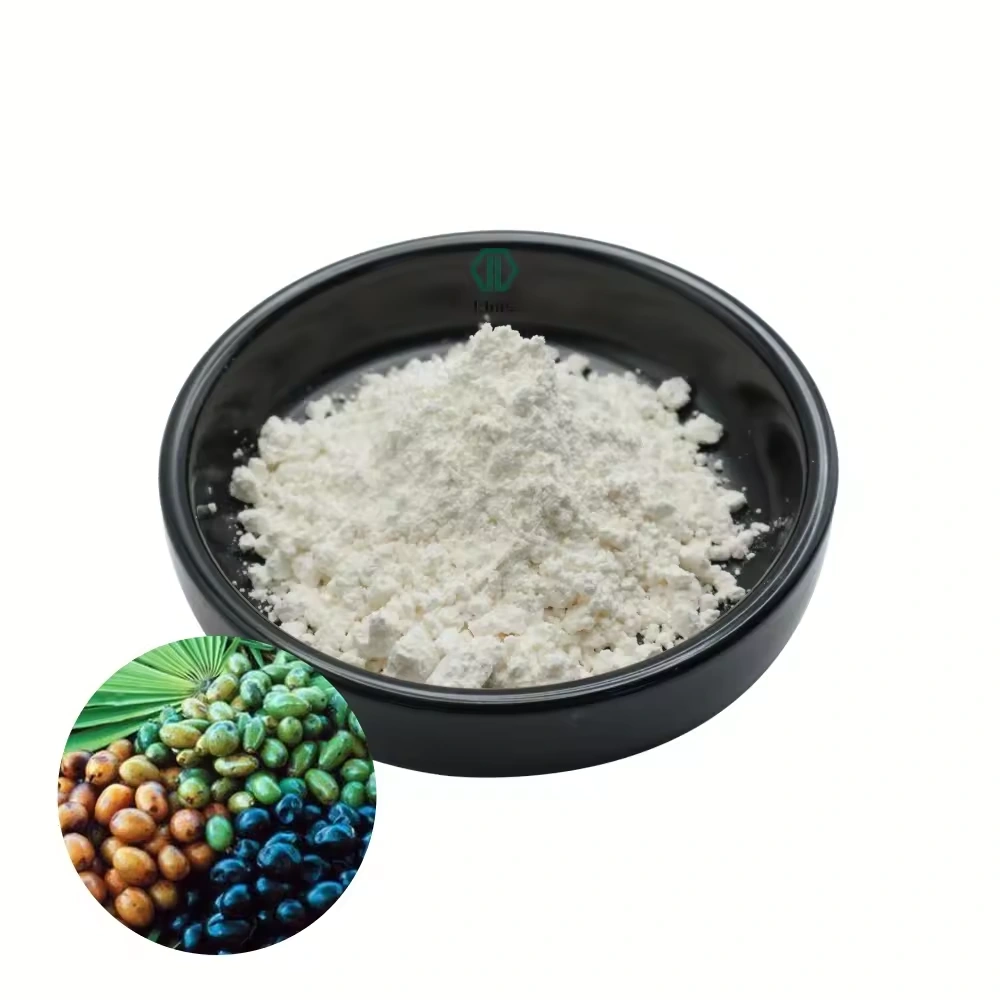
Nettle root, and which part of the plant
Nettle is two different supplements depending on which part of the plant is used, and the distinction is rarely made on a label.
Nettle leaf has a long food and tea history and is a mild diuretic. Nettle root is the material studied in men, and it is what this category usually means when it prints the word nettle.
Safarinejad 2005 ran a six-month randomised, placebo-controlled crossover trial of nettle root extract at 120 mg three times a day, which is 360 mg in total, and reported improved urinary symptom scores. Chrubasik 2007 is the standing review of the root literature and is more cautious about the size of the effect.
The Boost Surge X panel prints "nettle extract" and 20 mg. It does not say which part of the plant. That is two unknowns on one line, and this website records both as not published rather than assuming the studied version.
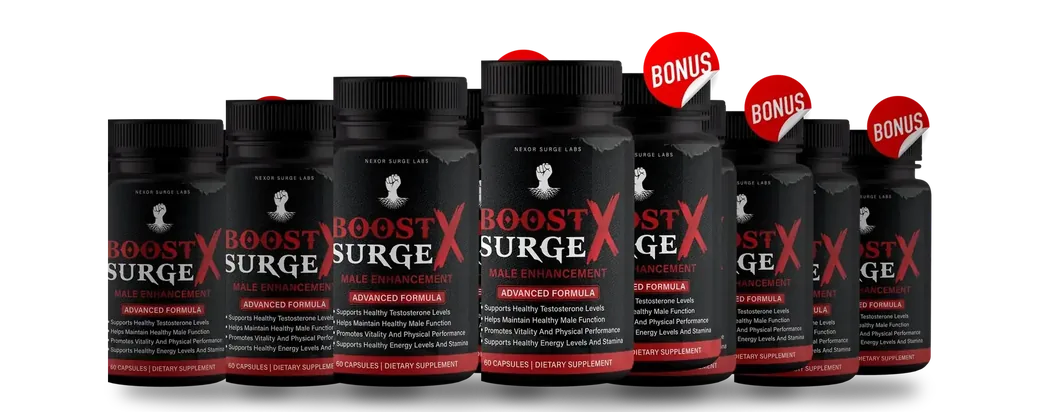
Order Boost Surge X after the appointment, not before
If you have a PSA test booked, the sensible order is the conversation first. The 180-day refund window is not going anywhere.
$354 for 6 + 2 bottles, $44.25 each
Order Boost Surge X On The Official WebsiteThe doses on this panel against the doses studied
| Ingredient | On this panel | In the trials | Ratio |
|---|---|---|---|
| Saw palmetto | 20 mg | 320 mg a day, and 960 mg in the largest trial | 1/16th |
| Nettle extract | 20 mg | 360 mg a day of root extract | 1/18th |
| Both together | 40 mg | 680 mg a day across the two | About 1/17th |
The trials that found nothing used sixteen to eighteen times these amounts. That is the central fact for anyone weighing a PSA interaction from this particular panel.
Put plainly: the studies that found no clinical effect used doses many times larger than these. It would be strange for a much smaller amount to produce a biochemical effect large enough to move a PSA reading when a much larger amount did not move symptoms.
That is a probabilistic argument rather than a guarantee, which is why the precaution below is still worth the sentence it costs.

Three other things worth mentioning at the same appointment
While the panel is out of your pocket, three more lines on it are worth thirty seconds of a clinician's attention, and none of them is the reason you started reading.
Boron at 20 mg. This is the figure on the panel that most deserves a pharmacist's opinion. The adult Tolerable Upper Intake Level for boron is 20 mg a day from all sources including food, and whether the panel means elemental boron or the weight of a boron compound is not published. There is a whole article on this website about that single line.
Everything else in the cupboard. The interaction question in this category is almost never one product; it is two. A men's formula, a bone or joint formula and a multivitamin can carry the same mineral three times over, and nobody lays the panels side by side unless prompted.
Anything new in the urinary tract. A new or changing symptom is a reason to see a doctor rather than to buy a supplement, and starting one at the same moment makes a change harder to interpret afterwards. If something is new, get it looked at first and start the capsule afterwards if you still want to.
What to say to your doctor
One sentence, and it is better said before the blood is drawn than afterwards.
"I take a men's supplement that contains saw palmetto and nettle, at 20 mg each."
Better still, photograph the panel on your phone and show it. A photograph removes every ambiguity about what is in it, takes no time, and lets the clinician see the other five items as well, one of which is a mineral at the adult upper intake level and worth a look in its own right.
- Before a PSA test: tell the doctor who ordered it.
- If you are already on a prostate medicine: raise it before starting, not after.
- If you are being monitored: do not start or stop a supplement in the middle of a monitoring period without saying so, because a changed variable makes a trend harder to read.
- If you have any urinary symptom that is new: that is a reason to see a doctor rather than to buy a supplement, and the two are not substitutes.
None of this is complicated and none of it requires you to give anything up. It requires you to mention it, which is the thing most people do not do. The safety page on this website carries the same guidance alongside the other interaction questions this panel raises, and the NIH consumer fact sheet is a good neutral read on talking to a clinician about supplements generally.
Sources
- Tacklind J, Macdonald R, Rutks I, Stanke JU, Wilt TJ. Serenoa repens for benign prostatic hyperplasia. Cochrane Database Syst Rev. 2012;12:CD001423. PMID 23235581. https://pubmed.ncbi.nlm.nih.gov/23235581/
- Barry MJ, Meleth S, Lee JY, Kreder KJ, et al. Effect of increasing doses of saw palmetto extract on lower urinary tract symptoms: a randomized trial. JAMA. 2011;306(12):1344-51. PMID 21954478. https://pubmed.ncbi.nlm.nih.gov/21954478/
- National Center for Complementary and Integrative Health. Saw Palmetto. https://www.nccih.nih.gov/health/saw-palmetto
- Safarinejad MR. Urtica dioica for treatment of benign prostatic hyperplasia: a prospective, randomized, double-blind, placebo-controlled, crossover study. J Herb Pharmacother. 2005;5(4):1-11. PMID 16635963. https://pubmed.ncbi.nlm.nih.gov/16635963/
- Chrubasik JE, Roufogalis BD, Wagner H, Chrubasik S. A comprehensive review on the stinging nettle effect and efficacy profiles. Part II: urticae radix. Phytomedicine. 2007;14(7-8):568-79. PMID 17509841. https://pubmed.ncbi.nlm.nih.gov/17509841/
- National Institutes of Health, Office of Dietary Supplements. Dietary Supplements: What You Need to Know. https://ods.od.nih.gov/factsheets/WYNTK-Consumer/

Every page, every journal post, the bottle facts and the ingredients go through review by Dr. Kambiz Tajkarimi, MD before they ship. We write from the Boost Surge X label and the distributor’s own batch paperwork, confirm every research record before publishing it, and print “not published” wherever a figure is not disclosed. Corrections go to [email protected] and move the review date forward. Last reviewed September 2026 by Dr. Kambiz Tajkarimi, MD.